A white marble quote can hide differences in stone mineralogy, thickness, lot consistency, fabrication, installation scope, and replacement responsibility. By the end, you will have a practical checklist for inspecting the proposed material, comparing like-for-like costs, documenting your choice, and deciding whether marble suits each room.
Key takeaways
- Judge mineralogy, porosity, hardness and veining—not just the marble’s colour name.
- Inspect full slabs and tiles for cracks, repairs, shade variation and surface defects.
- Record the approved lot, slab numbers, finish, quantity and written quality conditions.
- Compare delivery, wastage, sealing, installation and replacement costs with the square-foot rate.
Judge the Stone, Not the Colour Name
A suitable white marble proposal starts with the quarry and stone variety, not the colour name. Calcite-rich marble is vulnerable to scratching and acid etching, while other stones sold as “white marble” can differ sharply in mineralogy, porosity, hardness, veining, and maintenance needs.
Ask the dealer for technical data from the proposed material or lot:
- Water absorption ASTM C97 and bulk density
- Compressive strength under ASTM C170
- Flexural strength under ASTM C880
- Abrasion resistance under ASTM C241/C241M for areas exposed to foot traffic
These figures help you judge white marble flooring against its use, not against a showroom label. High absorption can increase staining risk, while weak flexural performance can matter when slabs face handling, support, or installation stress. Do not accept “premium quality” as a substitute for test data.
Check whether the proposed finish suits the room. Polished marble can become slippery when wet, making it a poor default for entrances, bathrooms, balconies, and pool-adjacent floors. Ask for wet-slip test information and compare polished, honed, brushed, or textured finishes alongside their cleaning and staining trade-offs.
A dealer who cannot name the quarry, stone variety, thickness, finish, and test basis has not given you enough information to approve the material. The right choice is the stone whose measured performance and surface treatment match your room, traffic, moisture, and maintenance tolerance.
Inspect Slabs and Tiles in the Yard
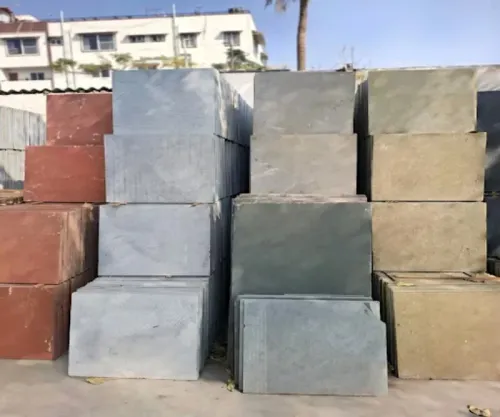
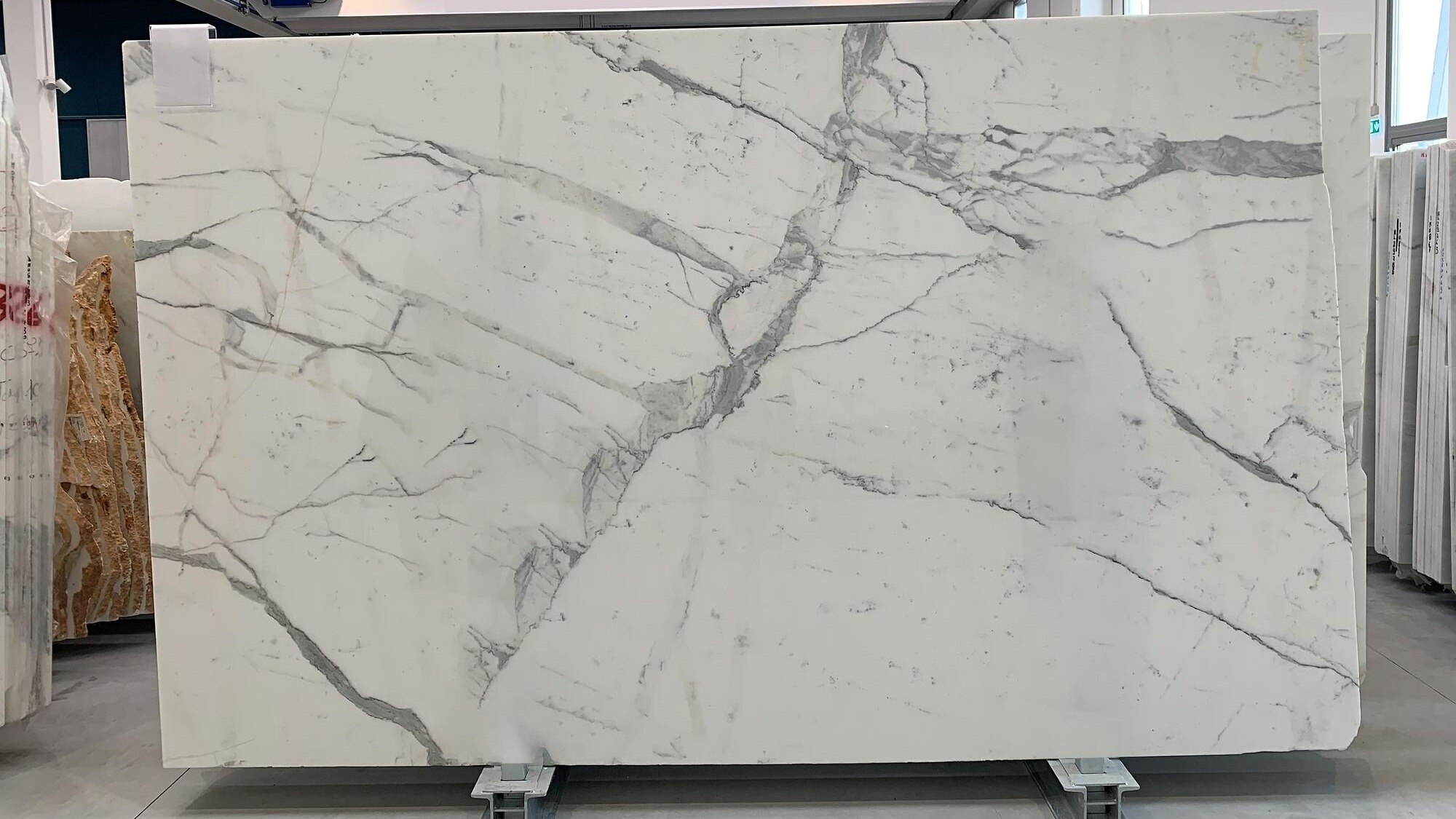
A single showroom tile cannot represent a large white-marble floor. Arrange a white marble slab inspection of several slabs or tiles from the proposed lot, viewed in daylight and under the artificial lighting used in your room.
1. Compare background tone, veining, cloudy patches, and shade across pieces. Decide which differences are acceptable natural variation versus defects, and reject any piece whose appearance falls outside the agreed range.
2. View the polished face dry and after wiping it with clean water. Staining, open pits, edge cracks, and dull patches can become more visible when wet. Mark every resin-filled fissure and ask whether the quoted price covers filled, reinforced, or unfilled material.
3. Turn over every slab or tile. Check for mesh backing and putty repairs, loose areas, filled holes, rust-coloured iron staining, and cracks that continue from the face to the back. These repairs are not automatically unacceptable, but undisclosed repairs can affect cutting, bonding, and later appearance.
4. Check thickness with a vernier caliper at several points, then place pieces together to reveal warping, lippage risk, chipped edges, and inconsistent calibration. Record the nominal thickness, permitted variation, tile dimensions, finish, and edge treatment.
5. Photograph the inspected pieces and record the accepted colour range, vein direction, filler treatment, joint width, and laying direction in the sample approval. Ask for a physical replacement sample or batch reference before accepting the quotation.
Demand Lot Identification and Written Approval
A showroom label cannot prove that inspected stone is the stone delivered. Require a traceable chain: the marble batch number and marble lot identification must appear on the quotation, inspection record, packing list, and invoice. Quarry origin information should name the quarry and country, plus the block number when available.
A catalogue name alone cannot establish identity.
Obtain a physical sample or batch reference for replacements. Inspect several slabs or tiles from the proposed lot in daylight and artificial light, then photograph their faces and backs beside the lot reference.
Your written sample approval should record the accepted colour range, veining, background tone, finish, filler or resin treatment, joint width, laying direction, and whether pieces may be rearranged for visual continuity.
| Record | Required detail | What it proves |
|---|---|---|
| Lot inspection sheet | Lot number, slab or tile IDs, dated photographs | The inspected pieces belong to the identified lot |
| Quarry document | Quarry origin information and block number | The stated source matches the proposed material |
| Written sample approval | Accepted appearance, treatment, finish, and layout rules | Both parties accepted the same variation standard |
| Delivery packing list | Matching lot number and quantity | The delivered material follows the approved record |
Do not accept a replacement from an unidentified bundle. A different quarry block or production lot can introduce obvious shade and vein changes, even under the same catalogue name. Hold disputed pieces aside before cutting or installation.
Compare the Complete Cost, Not Just the Square-Foot Rate
A lower marble price per square foot can produce a higher finished-floor cost once thickness, cutting, transport, and labour are added. Put each dealer’s quotation into the same comparison before choosing; do not compare a slab rate with a cut-tile rate.
Cost component | Dealer 1 | Dealer 2 Stone price per square foot | | Slab thickness and permitted variation | | Calibrated versus uncalibrated marble | | Finish and edge treatment | | Tile or slab dimensions | | Marble wastage allowance | | Transport, handling, and lifting | | Cutting, fabrication, and polishing | | Levelling, laying, joints, and protection | |
Ask each dealer to state whether the price covers slabs or cut tiles, the nominal thickness, and the actual slab thickness and usable area after cutting. Uncalibrated marble can require more adhesive or levelling; a cheaper rate may disappear in installation labour.
Check whether the marble wastage allowance reflects your room’s dimensions, veining direction, doorways, columns, and required visual continuity. A rectangular room with many cuts needs a different allowance from an open hall.
Confirm whether installation includes substrate preparation, levelling, laying pattern, polishing, final protection, and responsibility for lippage, cracks, or debonding. Nakoda Marble can be asked for the same line-item breakdown, making its quotation comparable with competing dealers rather than relying on a headline rate.
Related product
 | Marble Marble Nakoda Marble is a trusted supplier of high-quality natural marble in Bangalore, offering a wide range of premium marble stones for residential,... |
Match the Finish and Installation Responsibilities to the Room
Polished marble is a poor default for entrances, bathrooms, balconies, and pool-adjacent floors, where tracked-in or standing water can make the surface slippery. Ask for polished marble wet slip resistance data that names the test method, finish, and wet-use condition; a dry-floor result cannot prove wet safety.
- Use polished marble in dry living rooms or bedrooms when appearance and easy sweeping matter more than maximum traction.
- Choose honed marble flooring for damp interiors or busy entry zones when reduced glare and better grip justify more visible marks and a greater need for cleaning.
- Consider brushed or textured finishes outdoors or beside pools, after checking how their roughness affects dirt removal, bare-foot comfort, and staining.
Do not approve “non-slip” as a specification. Match the proposed finish to a full-size sample, then conduct a marble sealer sample test in the actual lighting; an impregnating sealer can darken pale stone and will not make it stain-proof. Ask what stains it targets and when reapplication is due.
Make the quotation identify who prepares and cures the substrate, checks flatness, supplies adhesive, lays and levels the stone, treats joints, polishes edges, and handles post-installation failures. Clarify responsibility for moisture staining, lippage, debonding, and cracking, because marble installation defects often originate below the stone.
Require movement joints where the substrate and room design need them.
Frequently asked questions
Why should you judge white marble by more than its colour name?
Different stones sold as white marble can vary in mineralogy, porosity, hardness, veining, scratching resistance, acid sensitivity and maintenance needs.
What should you inspect in a marble dealer’s yard?
Inspect full slabs and representative tiles for cracks, repairs, shade variation, veining, edge damage, surface defects and consistency with your intended finish.
What lot information should a white marble dealer provide?
Request the quarry and stone variety, lot identification, slab or tile numbers, finish, quantity, and written approval of the selected material before cutting or installation.
Which costs should you include when comparing white marble dealers?
Compare the stone rate with wastage, transport, handling, cutting, edge work, laying, polishing, sealing, breakage and replacement costs.
How should finish and installation responsibilities match the room?
Choose a finish suited to the room’s slip, staining and maintenance demands, then record who handles substrate preparation, laying, polishing, sealing and defect rectification.